
The job listing popped up on my LinkedIn feed during a late-night doomscrolling session: “Summer Lab Student at Public Health Ontario”. I pressed “quick apply”, submitted my resume after a bleary-eyed glance-over in the darkness, and promptly forgot about it as I passed out for the night. I didn’t expect anything. Who gets a job off of LinkedIn, anyway?
I soon found out that people do actually get jobs off of LinkedIn!
The hiring managers at PHO liked my resume so much that they extended an interview invitation. I prepared notes for two days, searched up possible interview questions on Glassdoor, and even reviewed the syllabus for Methods (Scientific Methods in Biology 2290), so I could bring up my limited lab skills. On the day of my interview, I put on my nicest (and only) blazer and hopped on a Zoom call where I brought up my time in Methods over and over again. Who cared if I streaked an agar plate only once, or that my hands shook every time I used a micropipette? I had at least seen and used them before.
When I got the letter of employment in my inbox, my heart somersaulted and my stomach sank. Had Methods prepared me for a job working in a lab?
Methods was a half-semester whirlwind of double-checking my micropipette measurements with my poor TAs every time I used it, of praying that my serial dilution was diluted enough but not too much. Methods was where I made friends, got acceptable grades, and learned which pipette tip to use for what size pipette. Now, I was to filter private drinking water, beaches, rivers, and pools and make sure they weren’t filled with bacteria. It was hard to see how Methods and all the other lab courses I had taken as a Medical Sciences student thus far would be applicable.
Methods (and my Contract) Kept me Employed
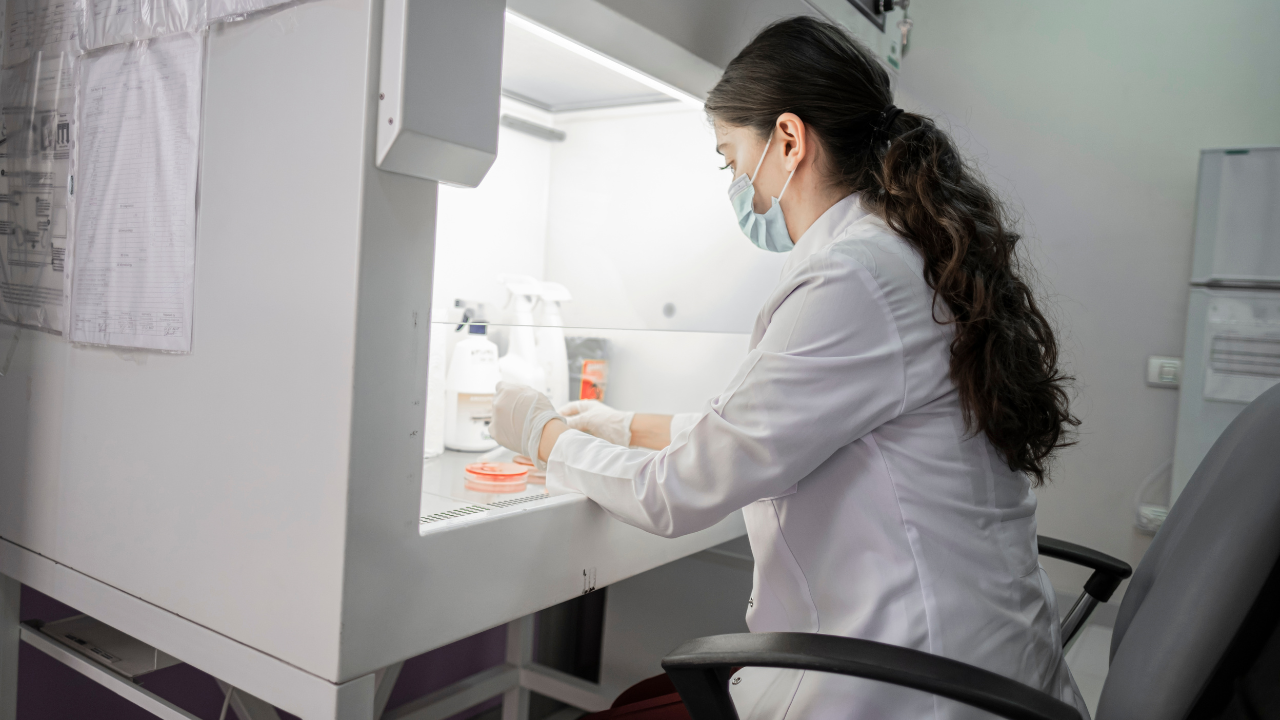
I didn’t see the benefit to my time in Methods until I finished reading four binders’ worth of training documents and got into the lab for the first time. It was a sparkling white, fairly new, incredibly large establishment with more beeping machines and test tubes than I had ever seen in my life. My eyes had never seen most of the objects and tools in there.
They did recognize one, though: the Gilson two-stop micropipette.
In Methods, the Gilson two-stop micropipette was the most surefire way I could show my TAs that I knew what to do, or at the very least could follow the instructions they laid out for me. My pipetting assessment came out perfectly. Even when I accidentally mixed up two pipettes and tried pipetting 2 microliters instead of 20 (the shame! The horror! The raised eyebrow my TA gave me as he asked what exact volume I had!), the micropipette was a tool I could reliably use to a relative level of accuracy and precision.
The first time the other summer students and I did a quality control test, the lab tech training us led us to a bench. She pulled out the 100 microliter pipette and the plastic tips. I couldn’t help but grin uncontrollably as she demonstrated the procedure of pipetting samples and a negative control onto agar plates. Dr. Belton’s voice rang in my head as I took my turn pipetting an unknown sample: one stop to pick up the sample, two stops to pipette the whole thing out, and the ejector button to release the plastic tip into a biohazard bin.
Methods came flashing back to me in bits and pieces over the summer. Every day, the lab techs made control plates of different microorganisms we could expect to see on our plates of water samples. They streaked E. coli, Citrobacter freundii, and Proteus mirabilis, sometimes even Klebsiella pneumoniae. It was almost like plating samples in Methods, just with blue plastic loops instead of metal ones. PHO’s agar plates were reminiscent of the ones Western provided us. The only difference was that the plates at my job were larger. Every day I spent at my job was an admittedly more fun version of a Methods lab day.
That changed when the lab got its hands on the first pool sample of the summer.
Private drinking water was an easy 100 mL into the filter apparatus and through the membrane filtration paper. Sure, sometimes the water came to us dirt-brown, smelly, and full of unidentifiable floating bits, but I loved how the dirt (hopefully just dirt) made a clean ring of particulates on the creamy membrane filtration paper.
Beaches were a little trickier, a humble 10 mL of the sample into an estimated 25 mL of deionized water. The hard part was that the finicky beach filters took all 25 mL through the filter before I could even pour the beach water in. Usually, the beach samples also came covered in coarse sand, full of kelp and dead flies, and with soaked requisitions. The fun with beaches, though, was noting all the beaches that I would never go to ever again after seeing the bacterial growth counts.
Rivers and creeks had to be input manually instead of on the digital system that the other samples used. Overall, though, the filtering procedures were similar to beaches. The only gripe I had with those water types was the fact that they always came in covered and filled with dirt.
Pools were 27 steps worth of extreme precision and accuracy, or the health inspectors would have to resample them. Pools needed to be clean, or at the very least contain acceptable levels of bacteria, for a business to keep them open. Worst of all, the 200 mL of pool water submitted for sampling would barely cover the amount of water used at those 27 steps. One mistake would leave you with too little water to do all the necessary tests.
Getting that first pool was something I watched the lab tech do with bated breath, wide eyes, and the entirety of Methods flashing across my vision. Every technique I had done in that lab course was at least one of the steps used to filter a pool. Pipetting? Done onto three separate plates. Additional spread plates? Also done to see growth, as if those first three plates weren’t enough. Streaking on yet another plate? A part of the protocol, too.
Filtering my first pool required supervision from two lab techs, almost a full hour, and absolutely no talking around me. But because I paid attention in Methods and to the techniques I learned, I filtered my first pool with moderate success. Then I did a second pool. Then a third. I did at least a dozen pool samples over the summer and they only got easier every time, even if I needed the 27 steps on hand to do them.
I spent four months having more fun at my job than I thought was possible, considering my commute was two buses and 50 total minutes one way. Being in lab courses for two years, especially Methods, made me confident in a place where I was not only the youngest summer student employed, but the youngest person employed at the lab. Having any amount of experience with lab skills, even the limited knowledge I had, gave me the confidence I needed to dive into every sample. Those courses gave me a foundation to build on. I credit them with helping me do the best possible work at my job.
My Southwest Ontario Town Hyperfixation and Keeping People Safe
In the months I spent with PHO, I eagerly awaited every delivery of water coolers. I loved the routine of opening each sample, no matter how wet or smelly. Most requisitions came with the scribbled names of people – real, living people that had no idea a 19-year-old held their well water in her hands. Hundreds of samples would come in every day, and I took the time to mentally file away as many names as I could. They came from places I recognized: Waterloo, Kitchener, sometimes even London. Most samples, however, came from places I had seen on roadsides while driving down country roads on camping trips.
I’m a little ashamed to admit it, but I became engrossed in small Southwest Ontario towns. If I had slower hours with no samples or any other lab work to keep me busy, which wasn’t too often, I would be on Wikipedia searching up small town history and demographics like it was another work task. Places like Lion’s Head, Kemble, and North/South Bruce Peninsula occupied an embarrassingly significant chunk of my brain. My Google Maps search history had never been so specific.
Walkerton was no exception to my small-town obsession. To a Toronto native like me, Walkerton is tiny. It boasts one, maybe two, postal codes for the several thousand people who live there. It’s part of Bruce County, and every address seemed the same. From my time on Google Maps “walking” down Walkerton’s downtown area with Street View as if I was actually there, Walkerton charmed me. It was quaint and had a lot of concession roads.
Walkerton was also the subject of national attention in 2000, when bacterial species E. coli and Campylobacter jejuni entered the town’s water supply after particularly heavy rainfall. Thousands got sick. Several people died. Many were left with health issues that are still ongoing. Negligence paved the path to a preventable crisis.
While I wasn’t a stranger to the Walkerton tragedy, its depth didn’t register to me until the day I typed in a person’s name followed by “Walkerton” into Google’s search bar to double-check spelling for data entry. Staring back at me were articles, papers, and interviews dating back as far as the initial onset of the crisis.
The bus rides back home that night were quiet, even amidst the screech of London traffic breaking up my thoughts. I had filtered the associated sample the night before during the evening rush. I hadn’t given it a second thought then, just stamped the date and stuck the barcode on the top of the form to have it filtered. That sample, though, had come from a place with a loaded history. There I was, 19 years old, employed because of a lab course, filtering water from a town that had faced a water crisis five years before I was born. I worked in a lab actively preventing tragedies for an agency that started operations in 2008, in part because of Walkerton.
The most humbling part of that realization was that the people of Walkerton still sent in their water 25 years later. They filled out their forms and sent in samples, no matter the weather, no matter the time, regardless of whether there was a holiday or if we had rejected their submissions previously. They trusted the PHO lab to test their water quickly, efficiently, and without mistakes. They trusted me to test their water without even knowing who I was, without ever seeing me, because I was a part of PHO.
So I pipetted pool samples to keep people safe at splash pads. I streaked agar plate after agar plate because people drank the water that I handled. I filtered every beach, every sample of well water, and every river and creek like people’s lives depended on it, because they did. Every filled-in requisition and every sample came from a person putting their trust in strangers to keep them safe. The least I could do was lean on my knowledge from Methods to make sure their trust wasn’t misplaced.
Maybe it’s self-centered to think that filtering water five days a week for 4 months straight saves lives. It’s certainly not the job you think of when you think of who saves lives. It’s a far cry from doctors or paramedics or health inspectors. And I’m certainly not who most people think of as someone doing water filtering. If the people of Southwestern Ontario knew that a 19-year-old was behind their water testing, I wonder what they’d think.
But every time I filtered someone’s water and it came back clean, I smiled. And every time I filtered someone’s water and it came back covered in bacterial growth, I smiled harder. It turns out that Methods, and all the other lab courses I had dragged myself through, were the reason I could catch that bacterial growth and help flag it for the labs. All my lab skills culminated in one wonderful, sticky-hot summer, making sure that Southwest Ontario received the best pipetting, streaking, and filtering I could give them.
If anyone reading this submits private drinking water samples to PHO’s London lab site or knows someone who does, thank you or them for trusting the agency with health and safety.
And if you submitted water to PHO’s London lab between May and August 2025, thank Methods for giving me the foundational skills to do the job you trusted me with.